Bitmain
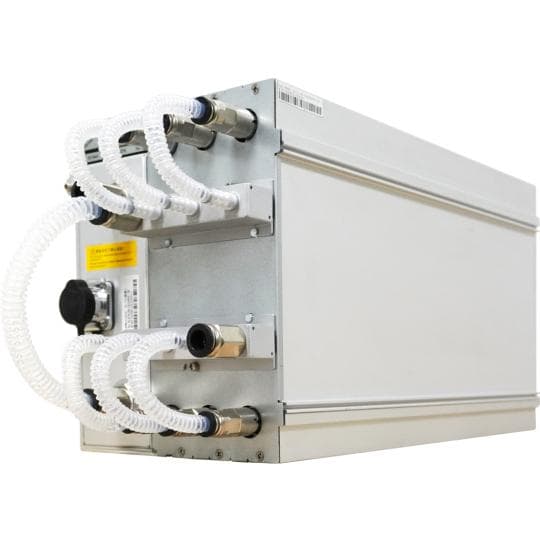
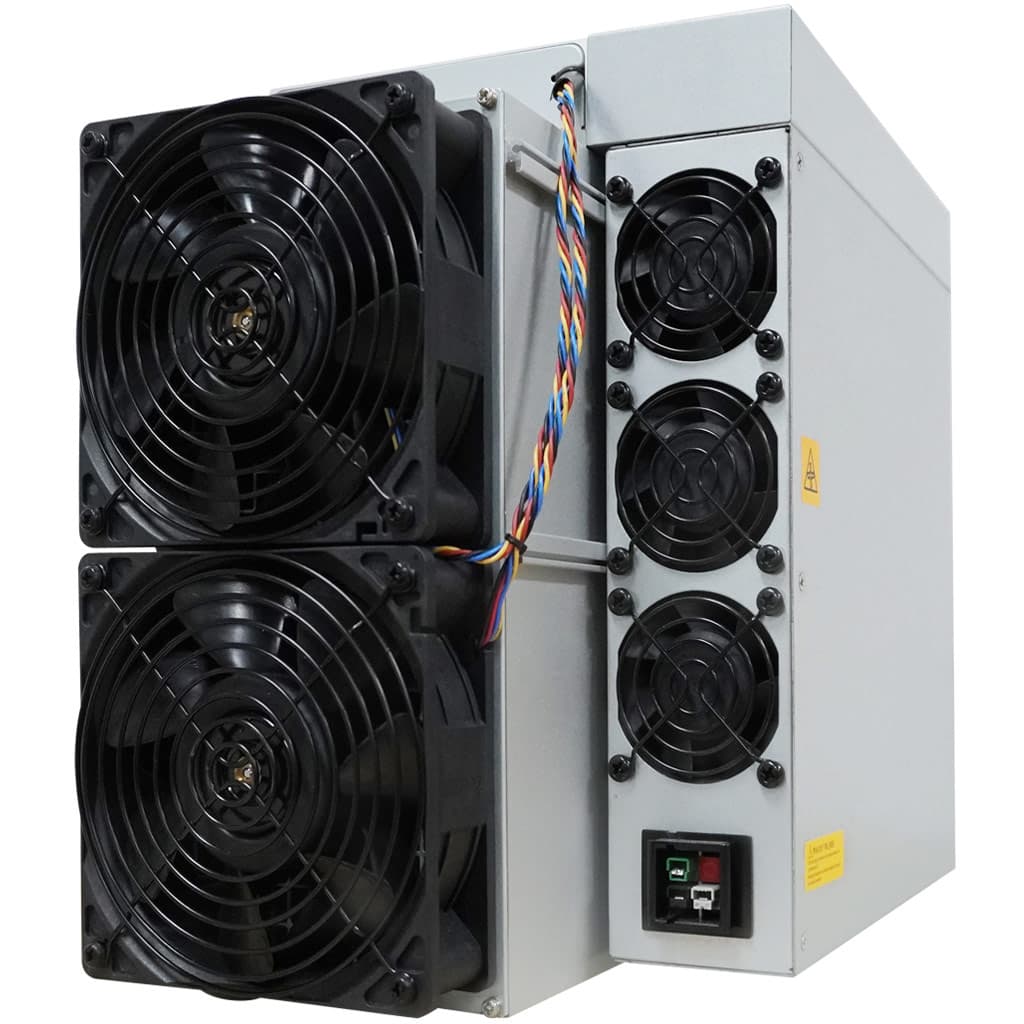
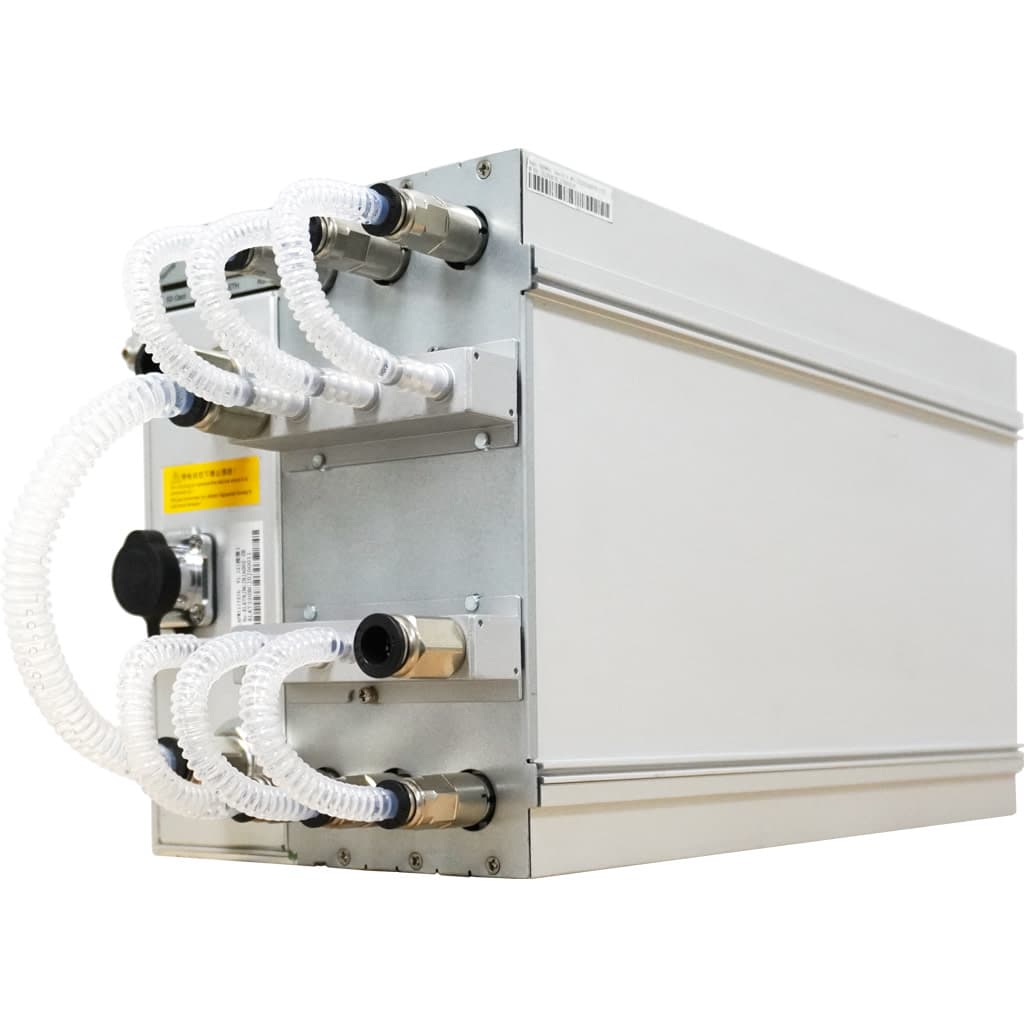
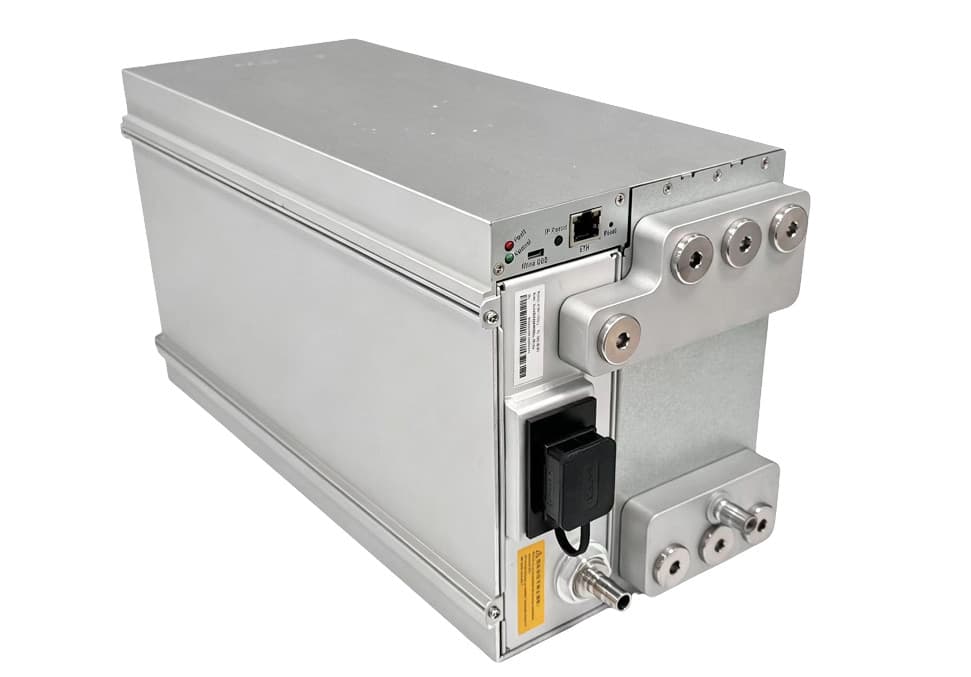
Antminer S23 XP Hyd.
AvailableNew
- Hashrate
- 600TH/s
- Power
- 5,340W
- Efficiency
- 8.9J/TH
- Hydro-cooled
- SHA-256
$14,535$24.23/TH
Market · 230/400 V, 50 Hz
Germany's mains supply is 230/400 V at 50 Hz: 230 V between a phase and neutral, 400 V between phases. Household sockets are types C and F. The Schuko (type F) socket is rated 16 A and the flat type C Europlug only 2.5 A. A large air-cooled miner drawing 3–3.6 kW at 230 V takes roughly 13–16 A continuously, close to the full rating of a Schuko socket, so it belongs on a dedicated circuit, preferably with an IEC 60309 industrial connector (blue for 200–250 V; 16 A and 32 A are common ratings).
Air-cooled miners with a 200–240 V input run phase to neutral and can be spread across the three phases of a 400 V supply. Hydro-cooled miners specified for 380–415 V three-phase match the 400 V line-to-line voltage directly.
Under the Low Voltage Connection Ordinance (NAV), additional appliances that raise the capacity the grid operator must hold available have to be notified to it, and installation work may only be done by the grid operator or a firm in a grid operator's installer register. Grid operators' connection conditions can add approval requirements; one requires prior approval for any single appliance above 12 kW. Confirm the details with the grid operator and a registered electrician.
| Supply | Connection | Listed miners that accept it |
|---|---|---|
| 230 V | Phase to neutral; household sockets (types C and F). | 53 of 93 |
| 400 V three-phase | Line to line; matches miners specified for 380–415 V three-phase input. | 40 of 93 |
Counted from the input-voltage range stated for each miner, for the 93 listed miners with a stated range. Nominal supply values; actual site voltage varies. Have a qualified electrician confirm your supply, breakers and cabling.
Germany's national weather service (DWD) places the country in the temperate rain climate of the mid-latitudes, in the transition between the maritime climate of western Europe and the continental climate of the east; the maritime influence weakens from north-west to south-east. Prevailing westerly winds bring moist air and rain throughout the year, so for most of the year outside air is well within any miner's intake range, while humidity needs attention.
Summer peaks are the design limit. During the June 2026 heatwave the 40 °C mark was exceeded several times and the DWD recorded a new national record of 41.8 °C at Möckern-Drewitz on 27 June 2026. Air-cooled sites should plan for such days with derating, evaporative assistance or hydro cooling. In the other direction, the DWD notes that persistent high-pressure systems can bring very cold winters, when intake air may need tempering with recirculated exhaust.
Lowest J/TH among listed models whose published input range includes a standard German supply voltage.
Bitmain
$14,535$24.23/TH
Bitmain
$11,684.05$20.14/TH
Bitmain
$7,931.55$26.01/TH
Bitmain
$8,359.05$17.41/TH
Germany is not a significant mining location in the most recent survey evidence. The Cambridge Centre for Alternative Finance (CCAF) Digital Mining Industry Report of April 2025, based on survey data as of 30 June 2024 from firms representing about 48% of network hashrate, did not list Germany among the 23 countries where respondents reported mining operations, although some respondents had their headquarters there. It found European activity concentrated in the Nordic countries.
CCAF's earlier mining map, last updated for January 2022, did show a share for Germany, but CCAF itself states there is little evidence of large mining operations in Germany to justify it and that the share was likely inflated by VPN or proxy traffic.
The financial supervisor BaFin states in its guidance for registry courts (first issued 21 September 2012, last amended 16 March 2023) that the creation or mining of bitcoins on its own is neither a banking business nor a financial service under the Banking Act (KWG).
At EU level, the Markets in Crypto-Assets Regulation (EU) 2023/1114 of 31 May 2023, applicable from 30 December 2024, sets requirements for offering and trading crypto-assets and for crypto-asset service providers; its recital 93 says the crypto-asset transfer service it covers should not include the miners who confirm transactions.
As published by the sources listed below on the date they were checked. Rules change: confirm the current position with the authorities or a local adviser before you buy.
Orders are handled the same way for every destination and scale with quantity:
Where a product shows "Availability on request" or "Available", stock is not held in a warehouse; lead time is confirmed on your quotation.
Standard shipping to Germany is free on every order. If you need it faster, choose express shipping at checkout and we quote it before payment is requested.
Customs clearance is handled by the German customs administration (Zoll), which levies import VAT (Einfuhrumsatzsteuer) together with any customs duty. Import VAT largely mirrors domestic VAT and is charged at the standard rate of 19 percent.
A business established in Germany needs an EORI number for customs activities. It is issued by the central customs authority and applied for through the Zoll-Portal, which became mandatory for applications on 1 October 2026. A private individual generally does not need one unless filing customs declarations more than occasionally; customs treats fewer than ten a year as occasional.
An importer that places electrical equipment on the German market, for example to resell it, must first register with stiftung ear under the Electrical and Electronic Equipment Act (ElektroG). Customs duty depends on the tariff classification of the goods and their country of origin.
Beyond a few machines, the miners are one line of the bill of materials. Transformers, switchgear, PDUs, racking, cooling and containers are specified around the miner model and the site's supply voltage, and can be quoted as one procurement scope.
Checked on October 11, 2026.
Wholesale & project supply
Send models, quantity, destination and available electrical capacity. Sales replies with equipment options, delivery terms and lead time.