Bitmain
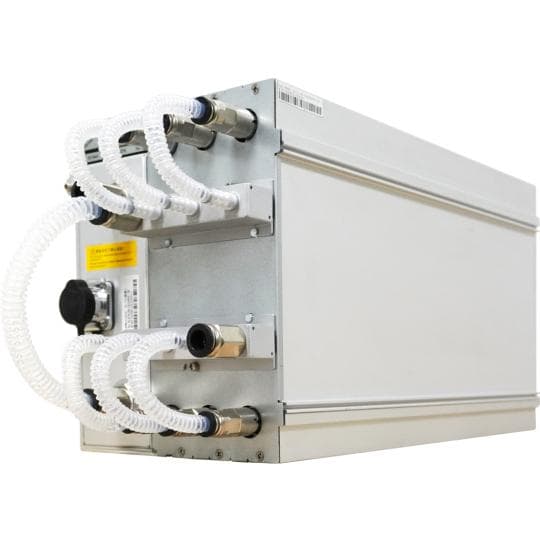
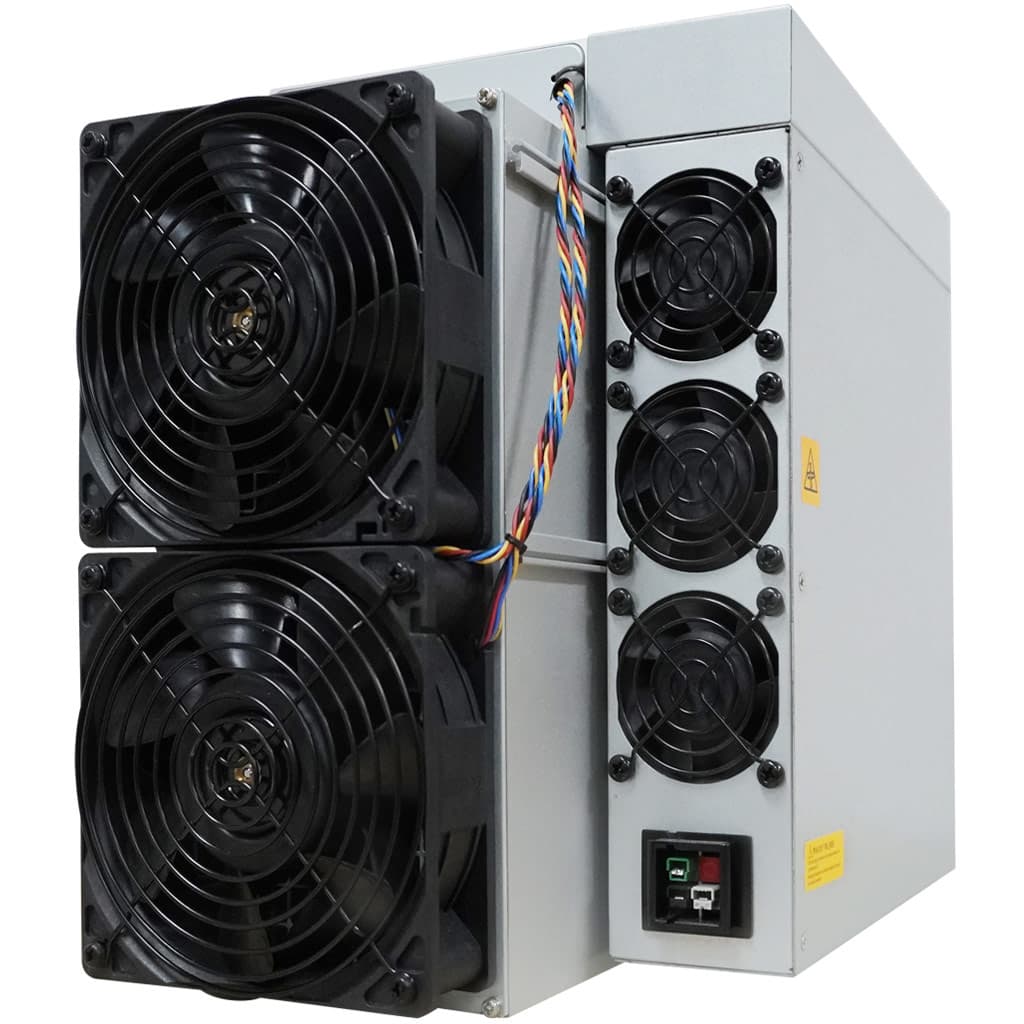
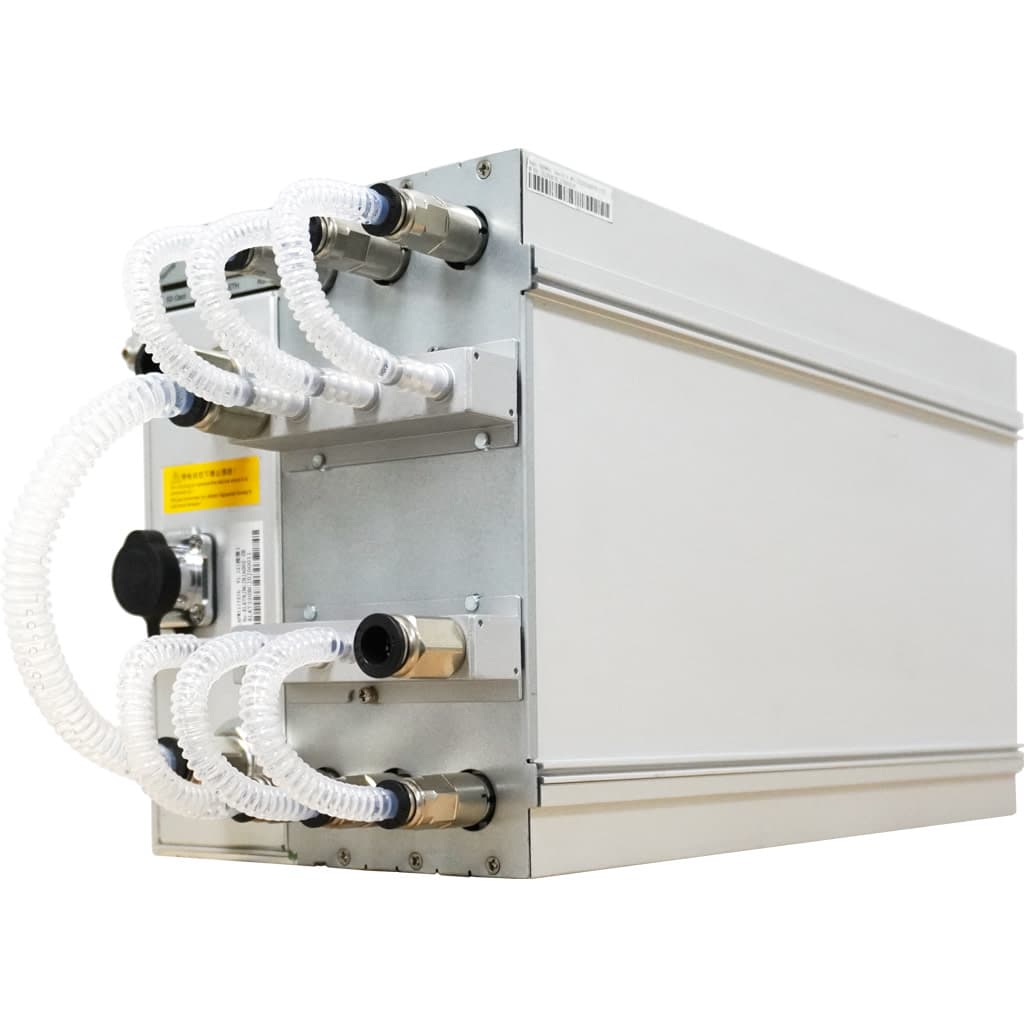
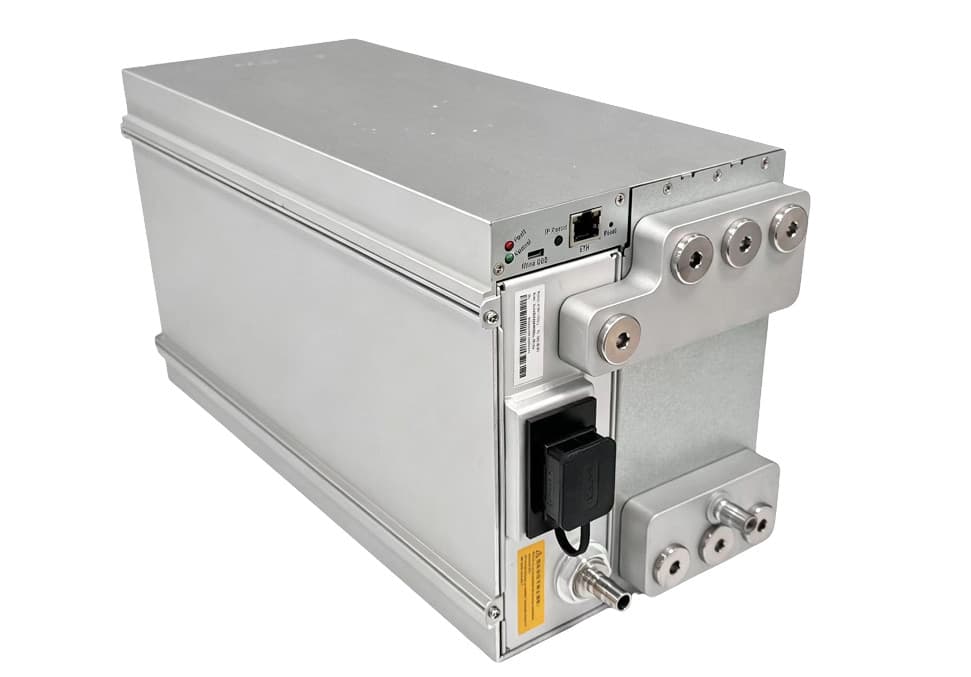
Antminer S23 XP Hyd.
AvailableNew
- Hashrate
- 600TH/s
- Power
- 5,340W
- Efficiency
- 8.9J/TH
- Hydro-cooled
- SHA-256
$14,535$24.23/TH
Market · 230/400 V, 50 Hz (240/415 V in Western Australia)
Most of Australia is supplied at 230/400 V, 50 Hz. In Western Australia, Western Power defines its standard supply on the South West Interconnected Network as 240 V single-phase (207–254 V) or 415 V three-phase (360–440 V).
The standard AS/NZS 3112 (Type I) socket is rated 10 A, about 2.3 kW at 230 V, so a 3–3.6 kW miner cannot run from one. A 3.3–3.6 kW miner draws roughly 14–16 A at 230 V. That is at or above the limit of a 15 A outlet, so plan a dedicated circuit with a 20 A or 32 A outlet, or hard wiring. Heavier-duty variants of the socket go up to 32 A, and a higher-rated plug will not fit a lower-rated socket.
Air-cooled miners with a 200–240 V or 220–277 V input connect line-to-neutral at 230 V (240 V in WA). Hydro-cooled miners specified for 380–415 V three-phase match the 400 V supply (415 V in WA) line-to-line.
Connection capacity limits how many machines a site can run. Western Power's standard small-user connection is 63 A single-phase or 32 A three-phase, and larger loads need an upgrade application. Confirm the details with your network operator and a licensed electrician.
| Supply | Connection | Listed miners that accept it |
|---|---|---|
| 230 V | 230 V; Single-phase, line-to-neutral; 240 V on Western Power's network in Western Australia | 53 of 93 |
| 400 V three-phase | 400 V three-phase; Line-to-line; 415 V on Western Power's network in Western Australia | 40 of 93 |
Counted from the input-voltage range stated for each miner, for the 93 listed miners with a stated range. Nominal supply values; actual site voltage varies. Have a qualified electrician confirm your supply, breakers and cabling.
The Bureau of Meteorology's Köppen maps divide Australia into six major climate classes: equatorial, tropical, subtropical, desert, grassland and temperate. The Bureau notes there are no cold or polar zones. Its temperature and humidity zones run from hot, humid summers in northern Australia to cold winters in Tasmania and the alpine regions.
For air cooling, the humid tropical north is the hardest case: hot, moist summer air reduces cooling headroom, and humidity calls for protection against condensation and corrosion. Inland desert and grassland zones have hot, dry summers, so dust filtration matters as much as intake temperature. In Tasmania and the alpine areas, winter intake air can be colder than manufacturers' minimum operating temperatures, so sites recirculate some exhaust air to temper it.
Lowest J/TH among listed models whose published input range includes a standard Australian supply voltage.
Bitmain
$14,535$24.23/TH
Bitmain
$11,684.05$20.14/TH
Bitmain
$7,931.55$26.01/TH
Bitmain
$8,359.05$17.41/TH
Australia is not among the ten largest bitcoin-mining countries in the Hashrate Index Q4 2026 heatmap, published 5 October 2026.
Tasmania has drawn at least one renewable-energy mining project. In June 2022 CoinDesk reported that Mawson Infrastructure Group had taken a 33% stake in Tasmania Data Infrastructure in exchange for about 1,975 mining rigs. Tasmania Data Infrastructure was developing a data centre in Tasmania to mine bitcoin on 100% renewable energy, with up to 35 MW of energy infrastructure planned for the third quarter of 2022 and expansion capacity of more than 100 MW.
The Australian Taxation Office (ATO) publishes guidance on crypto mining, last updated 18 November 2022. If you carry on a business of crypto mining, alone or by providing services to a mining pool operator, the crypto assets you receive are trading stock of that business. The ATO says not every miner is carrying on a business; that depends on your circumstances.
For GST, an enterprise registered for GST that provides mining services to an Australian pool operator makes a taxable supply. Mining services provided to a non-resident pool operator are GST-free. GST credits can be claimed on purchases related to those supplies, including mining equipment and the share of energy costs used for mining.
As published by the sources listed below on the date they were checked. Rules change: confirm the current position with the authorities or a local adviser before you buy.
Orders are handled the same way for every destination and scale with quantity:
Where a product shows "Availability on request" or "Available", stock is not held in a warehouse; lead time is confirmed on your quotation.
Standard shipping to Australia is free on every order. If you need it faster, choose express shipping at checkout and we quote it before payment is requested.
Imports are cleared by the Australian Border Force (ABF). Sea and air cargo is entered on an import declaration (form B650, N10). The ABF calculates and collects GST on imported goods at 10% of the value of the taxable importation. That value is the customs value plus international transport and insurance plus any duty. GST is paid to the ABF at clearance unless the importer is approved for GST deferral. Customs duty, if any, depends on the tariff classification and origin of the goods.
Queensland, Victoria, Western Australia and Tasmania have adopted the Electrical Equipment Safety System (EESS). It covers low-voltage equipment for household, personal or similar use. The responsible supplier must be an Australian or New Zealand entity with an ABN or NZ IRD number, registered on the EESS database, and must mark in-scope equipment with the RCM. Check whether your equipment is in scope.
Beyond a few machines, the miners are one line of the bill of materials. Transformers, switchgear, PDUs, racking, cooling and containers are specified around the miner model and the site's supply voltage, and can be quoted as one procurement scope.
Checked on October 11, 2026.
Wholesale & project supply
Send models, quantity, destination and available electrical capacity. Sales replies with equipment options, delivery terms and lead time.