Bitmain
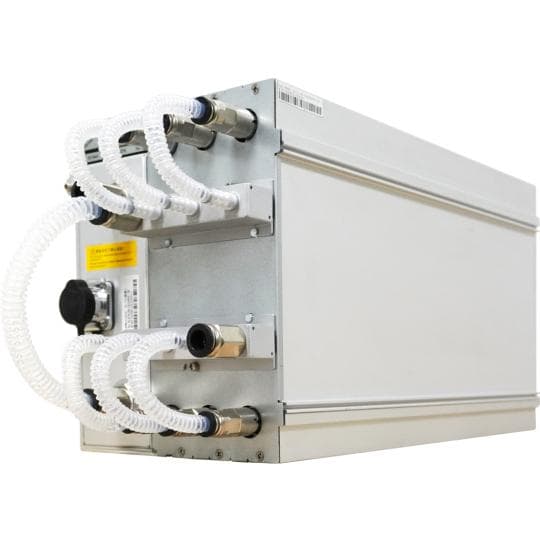
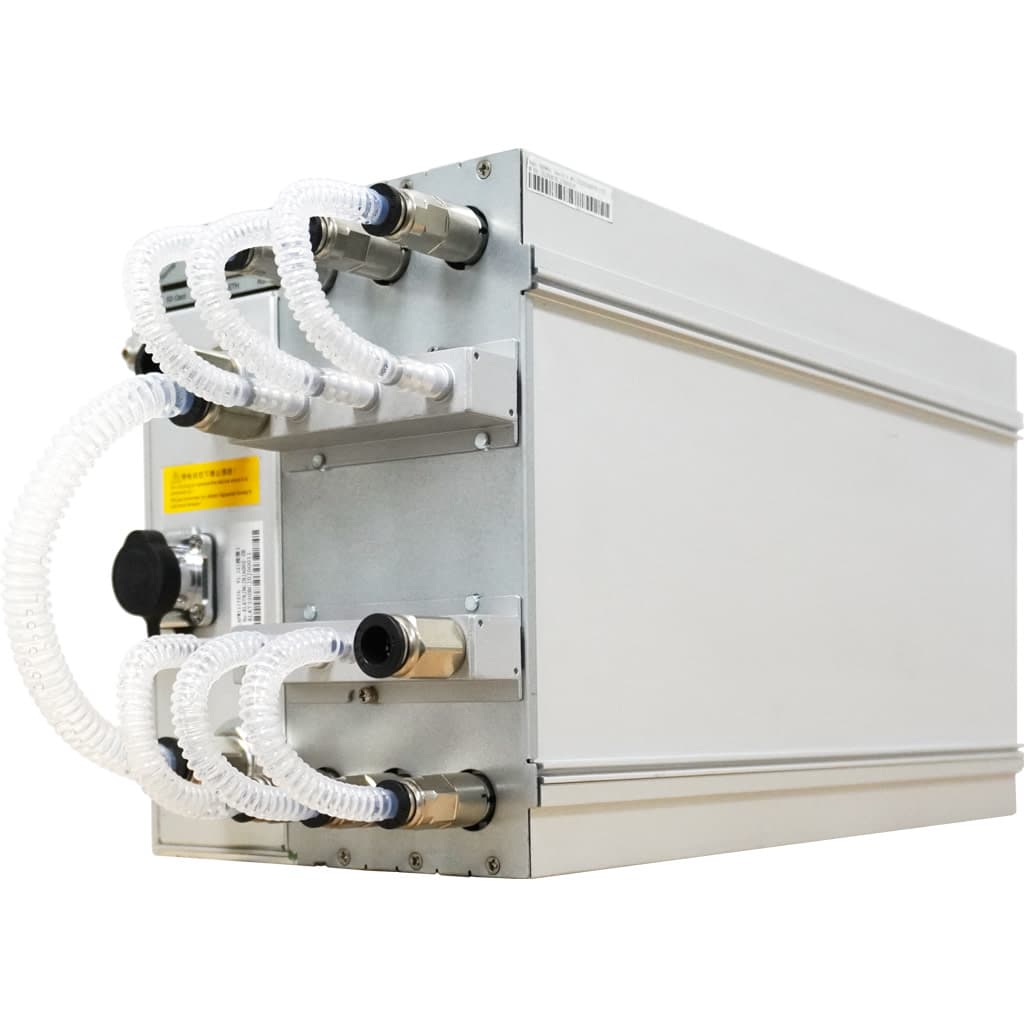
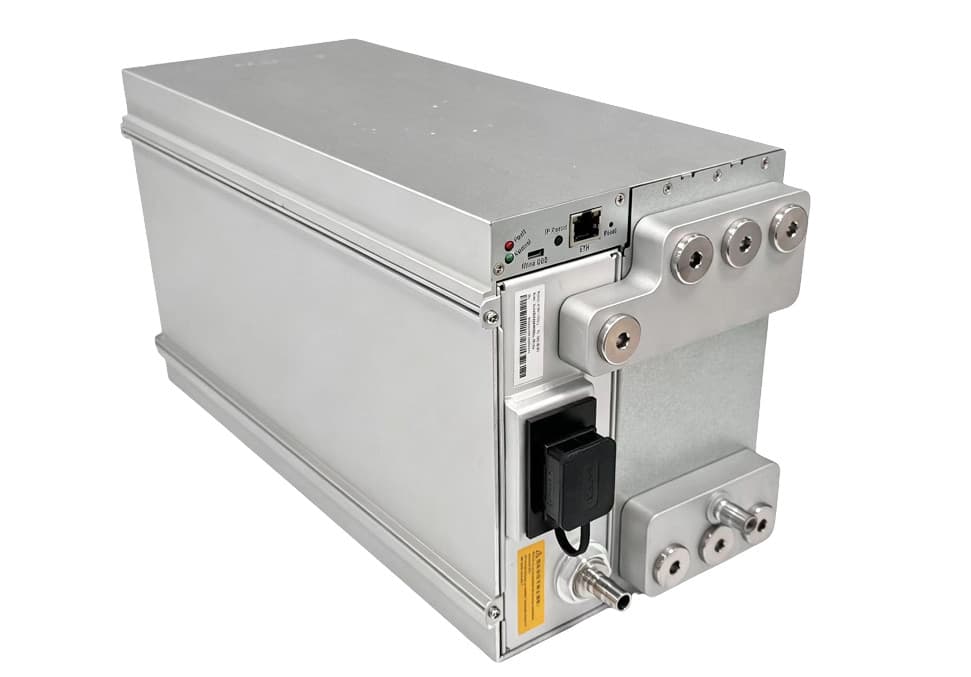
Antminer S23 XP Hyd.
AvailableNew
- Hashrate
- 600TH/s
- Power
- 5,340W
- Efficiency
- 8.9J/TH
- Hydro-cooled
- SHA-256
$14,535$24.23/TH
Market · 127/220 V or 220/380 V depending on the distributor, 60 Hz
Brazil's grid runs at 60 Hz nationwide, fixed by Law 4.454 of 1964, but the low-voltage system depends on the distributor. Cemig in Minas Gerais, for example, supplies 127/220 V three-phase or 120/240 V two-phase, while Enel in Ceará supplies 220 V between phase and neutral and 380 V between phases. Sockets follow NBR 14136 (Type N), rated at most 10–20 A depending on the version.
A large air-cooled miner draws 3–3.6 kW, about 13.5–16.5 A at 220 V: more than a 10 A socket allows, so give each machine a dedicated circuit and a connector rated for the load. In a 127/220 V area, air-cooled miners (200–240 V or 220–277 V input) connect between two phases at 220 V; in a 220/380 V area they connect phase to neutral. Hydro-cooled miners for 380–415 V three-phase match a 220/380 V supply, at the bottom of their range, so check the model's tolerance; in a 127/220 V area they need a transformer.
Both distributors serve installed loads of up to 75 kW at low voltage, and Cemig connects larger loads at medium voltage. Confirm the supply with the local distributor and a licensed electrician.
| Supply | Connection | Listed miners that accept it |
|---|---|---|
| 127 V | Single-phase, 127/220 V areas; Phase to neutral, e.g. Cemig (Minas Gerais); below the input range of miner power supplies | 2 of 93 |
| 220 V three-phase | Three-phase, 127/220 V areas; 220 V between phases; two phases feed air-cooled miners | None — outside published input ranges |
| 240 V | Two-phase, 120/240 V; Offered by Cemig as a two-phase system with neutral | 53 of 93 |
| 220 V | Single-phase, 220/380 V areas; Phase to neutral, e.g. Enel (Ceará) | 53 of 93 |
| 380 V three-phase | Three-phase, 220/380 V areas; 380 V between phases | 40 of 93 |
Counted from the input-voltage range stated for each miner, for the 93 listed miners with a stated range. Nominal supply values; actual site voltage varies. Have a qualified electrician confirm your supply, breakers and cabling.
A Köppen climate map for Brazil (Alvares et al., Meteorologische Zeitschrift, 2013), built from 2,950 weather stations, puts about 81% of the country in tropical (A) climates, 5% in dry (B) climates and 14% in temperate (C) climates.
For most sites, then, the design problem is warm, humid air for much of the year. Check summer intake temperatures against the maximum on each miner's product page, and treat humidity as a risk of its own: condensation and corrosion on hash boards. Air-cooled rooms need filtered intake and should keep intake air above its dew point. Hydro cooling with dry coolers, or immersion, keeps the electronics out of moist air and suits the tropical zones well.
Lowest J/TH among listed models whose published input range includes a standard Brazilian supply voltage.
Bitmain
$14,535$24.23/TH
Bitmain
$11,684.05$20.14/TH
Bitmain
$7,931.55$26.01/TH
Bitmain
$8,359.05$17.41/TH
Hashrate Index estimated in July 2026 that Brazil's hashrate had grown from roughly 2.5 EH/s to 3.5 EH/s over the year, about 0.37% of the global network. The same report notes that Brazil's national grid runs at 88–90% renewable generation on most days, anchored by large hydroelectric plants such as Itaipu, Belo Monte and Tucuruí, with 19.6 GW of wind capacity in the Northeast. The report describes operators placing modular data centres directly at wind farms to use power the grid cannot absorb; it counts 1,445 renewable plants affected by curtailment in 2024.
Law 14.478 of 21 December 2022 sets the rules for virtual-asset service providers, companies that exchange, transfer or hold virtual assets on behalf of others. Its text contains no provision on mining.
In February 2026 Gecex, the executive committee of Brazil's foreign-trade chamber, adopted Resolution 861 (dated 20 February, published 23 February 2026). It adds "servers dedicated to SHA-256 cryptocurrency mining" under NCM 8471.50.10 to the ex-tarifário list, the mechanism for temporary reductions of import duty on capital and IT goods. It covers only machines more efficient than 20 J/TH, measured at 35 °C, with more than 200 TH/s, and runs until 31 January 2028. Models outside that efficiency and hashrate specification fall outside it.
As published by the sources listed below on the date they were checked. Rules change: confirm the current position with the authorities or a local adviser before you buy.
Orders are handled the same way for every destination and scale with quantity:
Where a product shows "Availability on request" or "Available", stock is not held in a warehouse; lead time is confirmed on your quotation.
Standard shipping to Brazil is free on every order. If you need it faster, choose express shipping at checkout and we quote it before payment is requested.
Brazil's customs administration is the Receita Federal. Imports are declared in Siscomex, and the importer must first obtain authorisation (habilitação) to use it, unless the type of operation is exempt.
There is no single import VAT. The federal government charges import duty (II), set by the Mercosur Common External Tariff, plus IPI and the PIS-Importação and Cofins-Importação contributions. The destination state charges ICMS on imported goods under its own legislation, so the 26 states and the Federal District have 27 sets of rules and rates. Duty depends on the classification and origin of the goods.
Used equipment needs care. Under SECEX Ordinance 249 of 4 July 2023, used capital goods need a non-automatic import licence from Decex, issued only where no equivalent is produced in Brazil, and imports of used consumer goods are not allowed. Check how a used machine is classified before buying it for Brazil.
Beyond a few machines, the miners are one line of the bill of materials. Transformers, switchgear, PDUs, racking, cooling and containers are specified around the miner model and the site's supply voltage, and can be quoted as one procurement scope.
Checked on October 11, 2026.
Wholesale & project supply
Send models, quantity, destination and available electrical capacity. Sales replies with equipment options, delivery terms and lead time.