Bitmain
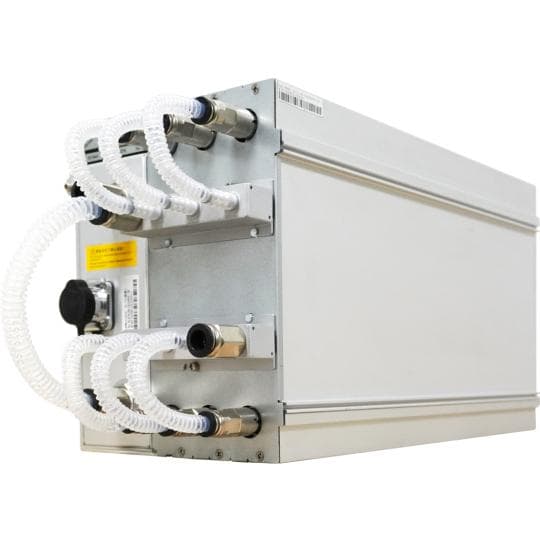
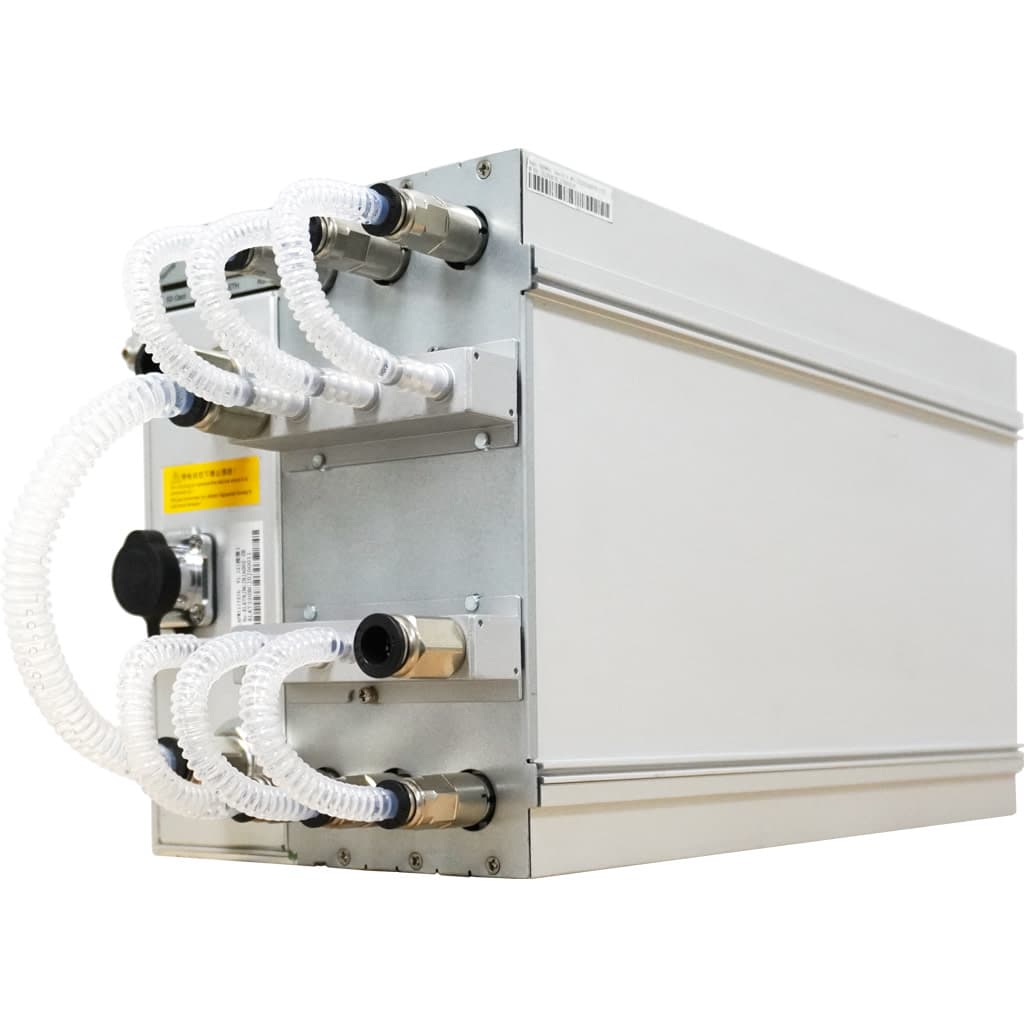
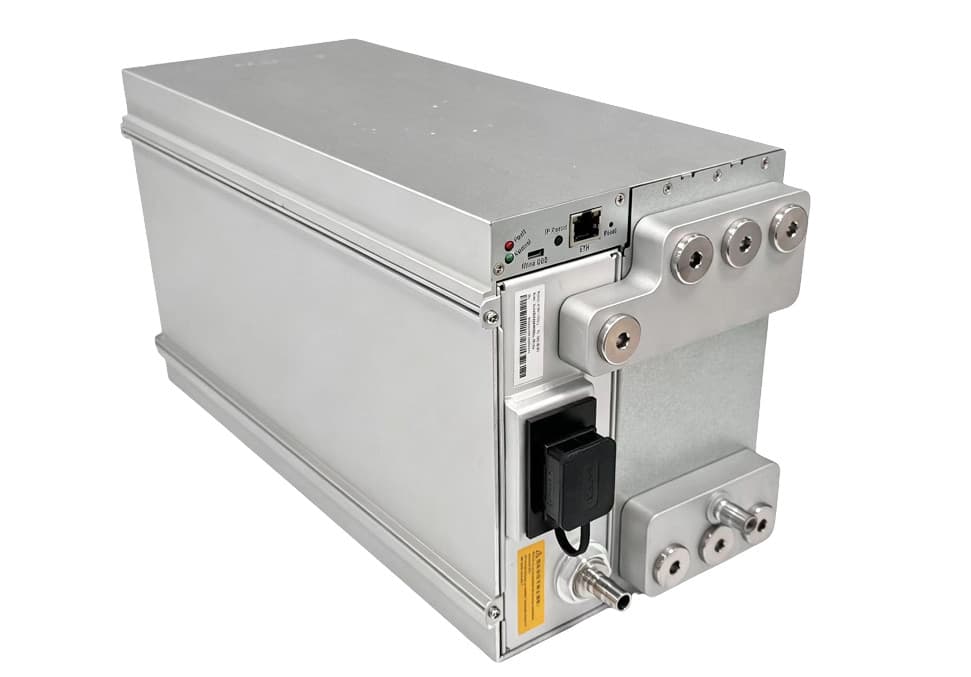
Antminer S23 XP Hyd.
AvailableNew
- Hashrate
- 600TH/s
- Power
- 5,340W
- Efficiency
- 8.9J/TH
- Hydro-cooled
- SHA-256
$14,535$24.23/TH
Market · 230/400 V, 50 Hz
Sweden's nominal low-voltage supply is 230/400 V at 50 Hz, and household sockets are types C and F (Schuko). A Schuko socket is rated at 16 A, while a large air-cooled miner drawing 3–3.6 kW takes roughly 13–16 A at 230 V, around the clock. Elsäkerhetsverket, the national electrical safety authority, warns that ordinary wall sockets are not made for repeated high loads over long periods and advises limiting electric-car charging from them to 8–10 A. A miner of that size belongs on its own dedicated circuit, with a fixed connection or an industrial IEC 60309 connector: blue fittings are the 200–250 V type and come in 16 A and 32 A ratings.
Air-cooled miners with a 200–240 V or 220–277 V input connect line-to-neutral at 230 V. Hydro-cooled models specified for 380–415 V three-phase match a 400 V three-phase supply directly; red IEC 60309 fittings are the 380–480 V type.
Before adding several miners, confirm the size of your connection and main fuse with your network company, and have a licensed electrician design and install the circuits.
| Supply | Connection | Listed miners that accept it |
|---|---|---|
| 230 V | 230 V; Single-phase, line-to-neutral | 53 of 93 |
| 400 V three-phase | 400 V three-phase; Line-to-line | 40 of 93 |
Counted from the input-voltage range stated for each miner, for the 93 listed miners with a stated range. Nominal supply values; actual site voltage varies. Have a qualified electrician confirm your supply, breakers and cabling.
SMHI, the Swedish weather service, describes Sweden's climate in Köppen terms. The south and the west coast are warm-temperate, with the coldest month averaging above −3 °C; on the 1991–2020 normals that zone reaches north only to Mälardalen and part of the southern Norrland coast. Most of the country north of that line is cold-temperate, with the coldest month below −3 °C and lasting winter snow cover, and the highest mountain stations have a polar climate.
Outside air is far below any miner's maximum intake temperature for most of the year. In a northern winter the risk is reversed: intake air can be colder than the minimum operating temperature manufacturers publish, so sites recirculate part of the exhaust to temper it and keep snow out of the airflow.
Heat reuse is documented in Stockholm Data Parks, a City of Stockholm initiative with the district heating provider Stockholm Exergi, aiming for data centres that waste no heat.
Lowest J/TH among listed models whose published input range includes a standard Swedish supply voltage.
Bitmain
$14,535$24.23/TH
Bitmain
$11,684.05$20.14/TH
Bitmain
$7,931.55$26.01/TH
Bitmain
$8,359.05$17.41/TH
In the Cambridge Centre for Alternative Finance's April 2025 Digital Mining Industry Report, a survey of 49 mining firms weighted by their power use, Sweden accounted for 0.39% of reported mining activity as of 30 June 2024. Cambridge cautions that its country percentages need careful interpretation.
In November 2021 Finansinspektionen reported that crypto miners were establishing themselves in northern Sweden, drawn to a Nordic region with good access to renewable energy, and that electricity use for Bitcoin mining in Sweden had grown by several hundred per cent between April and August 2021 to about 1 TWh a year.
In November 2021 the heads of Finansinspektionen, the financial supervisor, and the Swedish Environmental Protection Agency called for the EU to consider an EU-level ban on proof-of-work mining, and for Sweden to introduce measures halting new crypto-mining establishments. That was a public call, not a law.
The change that took effect concerns electricity tax. Data centres had a reduced energy tax on the electricity they used; the Riksdag decided in December 2022, on the government's proposal, to remove that reduction from 1 July 2023 because it was not fit for purpose. Skatteverket notes that electricity used in a data centre in certain municipalities in northern Sweden may still qualify for the northern-Sweden deduction (norrlandsavdrag) after that date.
As published by the sources listed below on the date they were checked. Rules change: confirm the current position with the authorities or a local adviser before you buy.
Orders are handled the same way for every destination and scale with quantity:
Where a product shows "Availability on request" or "Available", stock is not held in a warehouse; lead time is confirmed on your quotation.
Standard shipping to Sweden is free on every order. If you need it faster, choose express shipping at checkout and we quote it before payment is requested.
Sweden is part of the EU customs union, so goods from outside the EU are cleared through Tullverket, the Swedish Customs Service, on a customs declaration.
Import VAT is charged at the same rate as on a domestic sale, which for nearly all goods is 25 percent. A VAT-registered business importing goods for its operations normally reports import VAT in its own VAT return to Skatteverket, the Swedish Tax Agency. An importer that is not VAT-registered, such as a private individual, declares and pays VAT to Tullverket.
A business that appears as consignee, declarant or representative in an import declaration needs an EORI number; a private individual importing goods for their own use usually does not.
Customs duty depends on the goods' tariff classification and their origin, and is set at clearance.
Beyond a few machines, the miners are one line of the bill of materials. Transformers, switchgear, PDUs, racking, cooling and containers are specified around the miner model and the site's supply voltage, and can be quoted as one procurement scope.
Checked on October 11, 2026.
Wholesale & project supply
Send models, quantity, destination and available electrical capacity. Sales replies with equipment options, delivery terms and lead time.