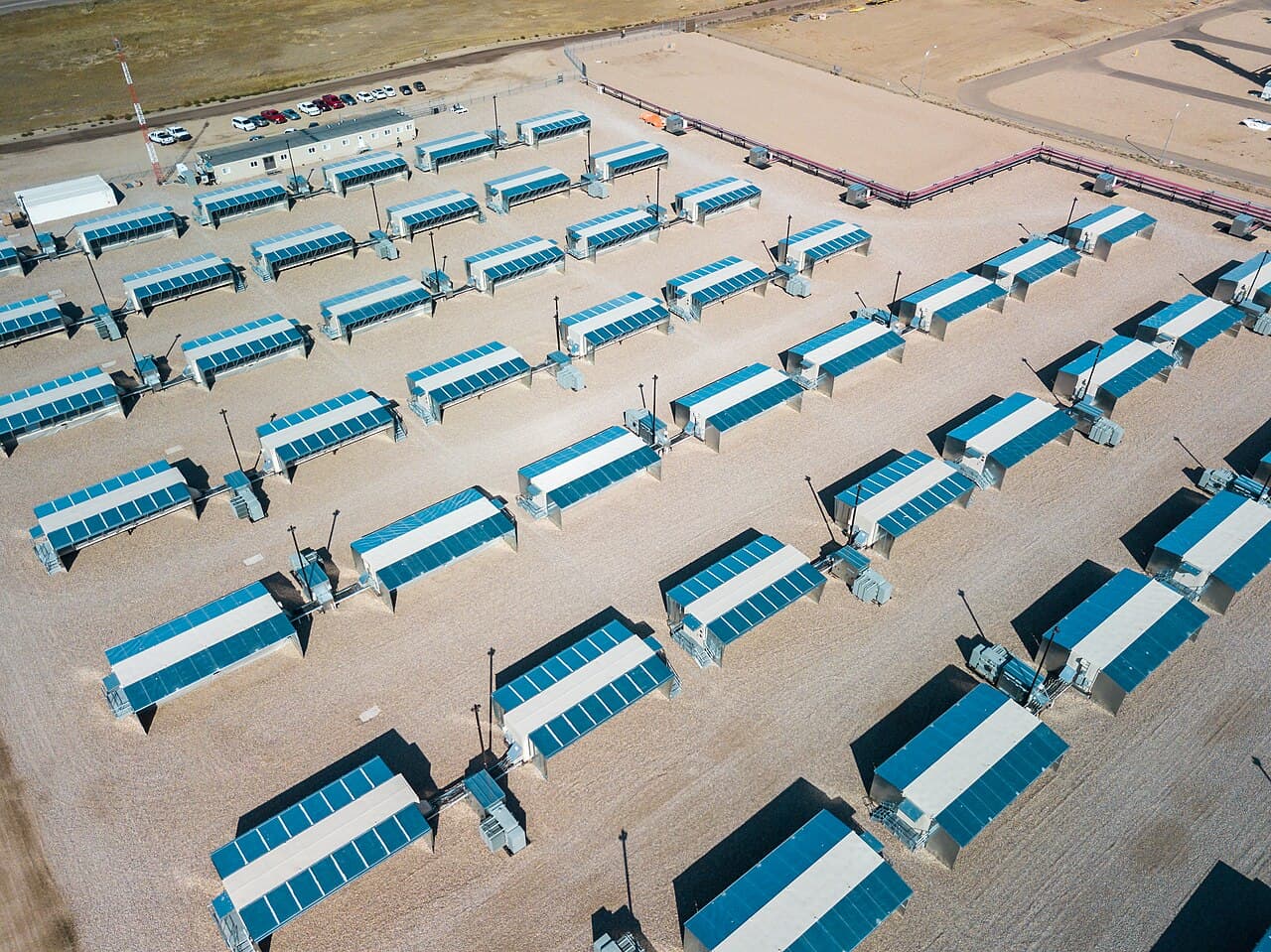
A mining farm needs equipment in seven systems: power, cooling, mining hardware, network, monitoring and control, safety, and spares. This checklist names each item and the one thing you must specify when you ask for a quote. Power, network, monitoring and safety are the same for every site. Cooling and a few spares change with the cooling method, so those are listed separately for air, hydro and immersion.
Key points
- Fix four inputs before you start: total kW, miner model and count, distribution voltage, and design ambient temperature. Every line below depends on them.
- Specify each item by rating and compatibility, not by name. "A transformer" is not a specification. "kVA, primary and secondary voltage, losses" is.
- Electrical items must be selected by a qualified electrical engineer and installed by licensed electricians to local code. Use this list to check scope, not to size equipment.
- Spares are part of the build. A site without fans, power supplies and cables on the shelf loses hashrate to shipping time.
| Input |
Where it comes from |
| Total site kW and IT load |
Power contract and How Many Miners Fit in 1 MW? |
| Miner model, version and count |
Quotation, with the manufacturer's published power and input range |
| Distribution voltage and phase |
Miner input range and the transformer secondary |
| Design ambient temperature |
Local climate records, hottest period |
| Cooling method |
Air, hydro or immersion, set by the miner type |
Power
| Item |
What to specify |
| Utility connection and metering |
Contracted kW or kVA, supply voltage, metering point, fault level |
| Medium-voltage switchgear |
Rated voltage, short-circuit rating, protection relays |
| Transformers |
kVA, primary and secondary voltage, losses, earthing arrangement, quantity |
| Low-voltage main switchboard |
Busbar current rating, short-circuit rating, main breaker, metering |
| Feeder breakers |
Rating for continuous load, trip characteristics, coordination with upstream protection |
| Power cables and trays |
Conductor size for current and voltage drop, insulation rating, route |
| PDUs |
Input voltage and phase, breaker rating per outlet group, outlet type, metering |
| Miner power cords |
Connector at each end, conductor size, length |
| Earthing and bonding |
Earthing system, bonding of racks, containers and pipework |
| Surge protection |
Device type and location at each board |
| UPS for network and controls |
Load and runtime. Miners are not normally on a UPS |
| Power quality equipment |
Only if the utility requires power factor or harmonic correction |
Cooling for air-cooled sites
| Item |
What to specify |
| Intake louvres and filters |
Face area, filter class, pressure drop when dirty |
| Exhaust fans |
Airflow at design static pressure, motor power, speed control |
| Hot-side containment |
Sealing between cold and hot sides, no bypass gaps |
| Winter mixing dampers |
Return of warm air to keep intake above the miner's minimum operating temperature |
| Evaporative pads, if used |
Water supply and quality, pump, humidity limit |
| Ventilation controls |
Temperature and pressure setpoints, fan staging |
Cooling for hydro sites
| Item |
What to specify |
| Circulation pumps |
Flow and head with all miners connected, redundancy |
| Manifolds and quick couplings |
Connector size matching the miner, isolation per unit |
| Piping, valves and strainers |
Materials compatible with the coolant, pressure rating |
| Heat exchanger |
kW duty, approach temperature, if loops are separated |
| Dry cooler or cooling tower |
kW rejected at design ambient, supply temperature |
| Expansion vessel and relief valve |
Loop volume, pressure limit below the miner's maximum |
| Coolant and inhibitor |
Type and chemistry the miner manufacturer permits |
| Bypass or mixing valve |
Keeps inlet above the miner's minimum at cold start |
| Flow, pressure and temperature sensors |
Per loop and per rack, with alarms |
| Leak detection |
Sensor locations, automatic shutdown action |
Cooling for immersion sites
| Item |
What to specify |
| Tanks |
Slots, compatible miner models, lid and cable management |
| Dielectric fluid |
Type, flash point, volume for first fill and top-up |
| Fluid pumps and filtration |
Flow per miner, filter rating |
| Heat exchanger or distribution unit |
kW duty per tank, secondary loop flow |
| Dry cooler or cooling tower |
kW rejected at design ambient |
| Hoist and drip trays |
Lifting capacity, drain time, fluid recovery |
| Spill containment |
Volume, as required by local regulations |
| Level and temperature sensors |
Per tank, with alarms |
See immersion systems and hydro cooling systems.
Mining hardware
| Item |
What to specify |
| Miners |
Manufacturer, model, hashrate version, cooling type, condition, quantity |
| Power supplies, if separate |
Model matched to the miner, input range |
| Racks or shelving |
Load rating, slot dimensions, airflow path, service access |
| Containers, if used |
Rated kW, input voltage, miner compatibility, cooling capacity |
| Firmware |
Version, stock or third-party, update method |
Network
| Item |
What to specify |
| Internet uplinks |
Primary and backup route, independent where possible |
| Router and firewall |
VPN for remote access, no inbound access to miners |
| Switches |
A wired port per miner plus spares, uplink speed |
| Ethernet cabling |
Category, run lengths within the 100 m limit, labelling |
| Address plan |
Reserved addresses mapped to rack positions |
Miners need little bandwidth. Bitmain's published specification for the Antminer S21 lists an RJ45 Ethernet 10/100M interface. See networking.
Monitoring and control
| Item |
What to specify |
| Fleet management software |
Per-unit hashrate, temperature and fan data, bulk configuration, alerts |
| Power metering |
Per feeder and per PDU, logged |
| Environmental sensors |
Intake and exhaust temperature, humidity, differential pressure |
| Cooling plant controller |
Setpoints, alarm outputs, remote access |
| Alerting |
Who is notified, by what channel, at what threshold |
| CCTV and access control |
Coverage, recording retention, entry logging |
Safety and fire
| Item |
What to specify |
| Smoke and heat detection |
Coverage of electrical rooms, halls and containers |
| Fire extinguishers or suppression |
Type suitable for energised electrical equipment under the local fire code |
| Emergency stop |
Location, what it disconnects |
| Lockout and tagout equipment |
Locks and tags for every isolation point |
| Arc-flash labelling and protective equipment |
As determined by the electrical engineer's study |
| Hearing protection |
For air-cooled halls. Bitmain publishes 76 dB(A) for a single Antminer S21 |
| Emergency lighting and exits |
Routes kept clear of cables and pallets |
| Spill kit |
For hydro and immersion sites |
| First aid |
Kit and trained person on shift |
Never bypass a breaker, interlock or protective device to keep machines running.
Set quantities from your fleet size, supplier lead times and the failure rate you observe. The right number is the one that covers the wait for a replacement.
| Item |
What to specify |
| Cooling fans |
Exact fan model for each miner type (air sites) |
| Power supplies |
PSU model matched to each miner model |
| Hashboards |
Model and version matched to the miner |
| Control boards |
Compatible model |
| Signal cables and power cables |
Lengths and connectors as fitted |
| Hydro components |
Couplings, hoses, seals, a spare pump (hydro sites) |
| Filters |
Same class and size as installed (air sites) |
| Fluid |
Top-up stock (immersion sites) |
| Network spares |
A switch and patch leads |
| Repair tools |
Multimeter, clamp meter, thermal camera, blower |
What changes by cooling method
| System |
Air |
Hydro |
Immersion |
| Miner type |
Air-cooled |
Hydro |
Immersion |
| Typical distribution |
Single-phase to each miner |
Three-phase to each miner |
Per the miner's published input |
| Heat rejection |
Exhaust fans |
Dry cooler |
Dry cooler |
| Liquid handling |
None, unless evaporative |
Coolant loop |
Dielectric fluid and secondary loop |
| Filtration |
Air filters |
Coolant strainers |
Fluid filters |
| Fan spares |
Yes |
No miner fans |
No miner fans |
| Leak or spill provisions |
No |
Yes |
Yes |
| Hearing protection |
Yes |
At dry coolers |
At dry coolers |
Confirm the distribution row against the published input range of your exact model. Bitmain, for example, publishes 220 to 277 V single-phase for the air-cooled Antminer S21 and 380 to 415 V three-phase for the Antminer S21 XP Hyd.